

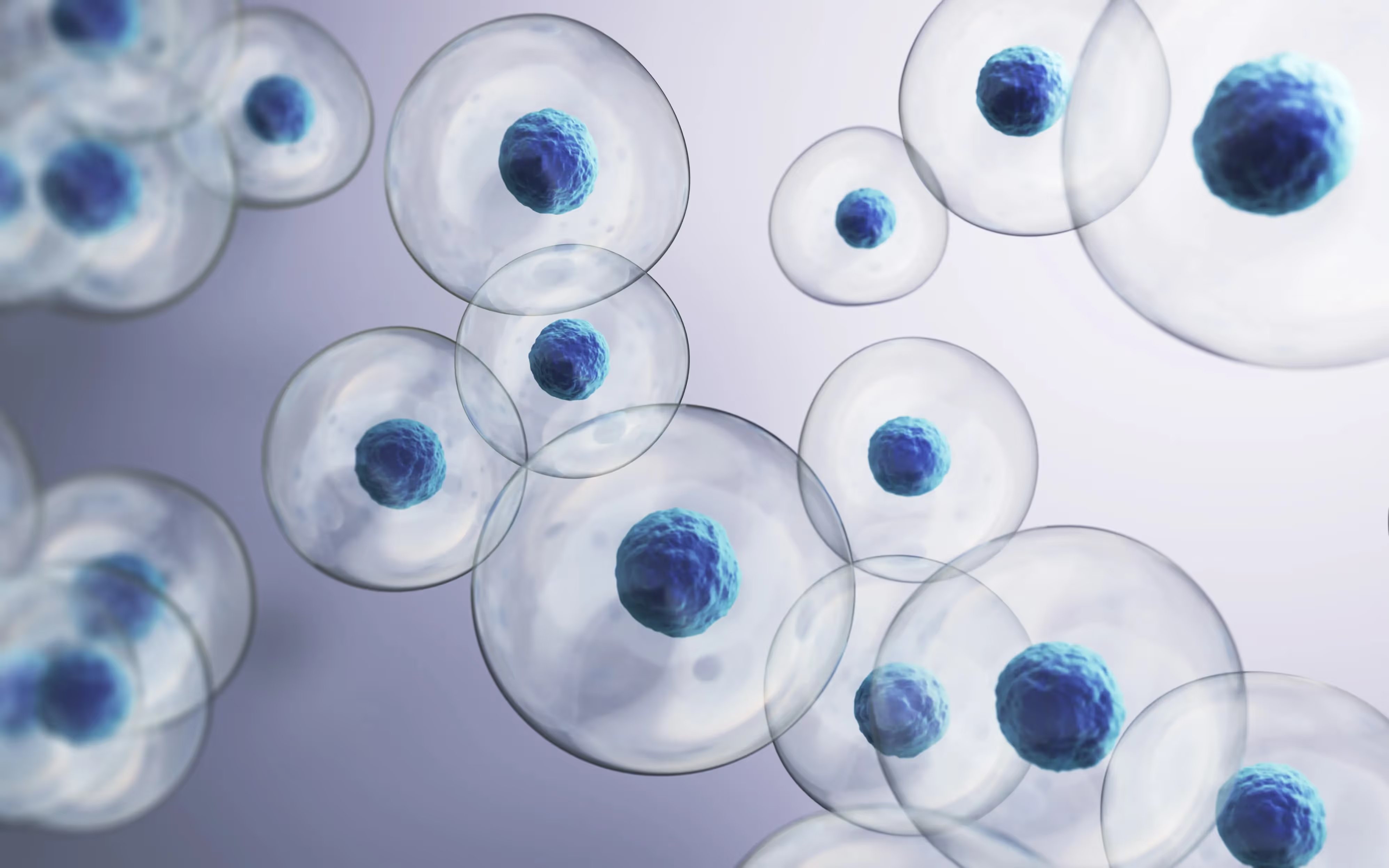
Every time you finish a hard set, drop the barbell, or push through the last mile, your body activates a microscopic repair crew that most people have never heard of. These aren’t the protein molecules you’re obsessing over or the sleep cycles your coach keeps mentioning. They’re stem cells — and the fitness industry is finally paying attention to what they actually do.
For years, “stem cell therapy” lived exclusively in the world of disease treatment and experimental medicine. But a wave of landmark research published in early 2026 is changing that narrative fast. Scientists now understand that your stem cells aren’t just a backup system when things go wrong — they’re a primary driver of every adaptation your training is designed to produce.
$28B Global stem cell therapy market in 2026
47% More muscle stem cells in older rats after 13 weeks of endurance training
3.5× Higher levels of the age-related “cellular brake” protein in old vs. young muscle cells
What Are Stem Cells, and Why Should You Care?
Inside your skeletal muscles sits a specialized population of stem cells called satellite cells. They live in a dormant state between the muscle fiber membrane and the outer connective tissue — just waiting. The moment you create enough mechanical stress, metabolic demand, or micro-damage from training, satellite cells spring awake. They multiply, fuse into damaged muscle fibers, and drive the rebuilding process that makes you stronger and bigger over time.
Think of them less like emergency responders and more like a permanent construction crew embedded in the building itself. They’re not there just for disasters. They’re responsible for the ongoing renovation that is hypertrophy — the gradual remodeling that turns a consistent training stimulus into a more capable, more powerful body.
“People with more active satellite cells tend to have a greater potential for muscle hypertrophy. Your ability to grow muscle isn’t just about protein intake or load — it’s about how effectively these cells can respond.”
Research shows that resistance training is the single most powerful trigger for activating satellite cells. Progressive overload — adding weight, reps, or intensity over time — is essentially an instruction signal your body sends to wake them up. Without that progressive challenge, the crew sits idle. Without the crew, the gains stall.
The Aging Problem Nobody Is Talking About
Here’s where it gets uncomfortable. As you age, your satellite cell population doesn’t just shrink — the cells that remain start behaving differently in ways that directly undercut your recovery and growth capacity.
A January 2026 UCLA study published in Science revealed something counterintuitive: muscle stem cells in aged tissue accumulate high levels of a protein called NDRG1 — reaching concentrations 3.5 times higher than in young cells. NDRG1 acts like a cellular brake, suppressing mTOR signaling, which is the same growth pathway that’s central to nearly every muscle-building supplement on the market. The aged cells essentially slow themselves down to survive in the harsh environment of aging tissue.
KEY FINDING — UCLA / SCIENCE JOURNAL, 2026 When researchers blocked NDRG1 activity in aged mice, their muscle stem cells immediately behaved like young cells again — reactivating quickly and accelerating muscle repair after injury. The cells recovered their “sprint” capacity, though this came with a tradeoff in long-term survival. This suggests the aging slowdown isn’t permanent deterioration — it’s an adaptation that could potentially be reversed.
This isn’t an abstract aging concern. If you’re over 35 and noticing that recovery takes longer than it used to — that your muscles feel sore for days after sessions that once bounced back in 24 hours — you’re experiencing this shift in real time. Your satellite cells are still there. They’re just increasingly conservative.
The Exercise–Stem Cell Feedback Loop
The good news: exercise is the most well-documented tool we have for keeping your stem cell population active, numerous, and functionally young. The relationship runs in both directions — training stimulates stem cells, and healthier stem cells produce better adaptations to training.
A comprehensive review in ScienceDirect confirmed that both acute intense exercise and consistent moderate training increase circulating progenitor cells in the bloodstream — cells that contribute to tissue repair and vascular health across the body. In practical terms: consistent training doesn’t just build the muscles you’re targeting. It maintains the cellular machinery that keeps your entire body repairable.
UCLA’s Dr. Thomas Rando, whose lab has studied exercise and stem cell aging for decades, found that one major effect aging has on stem cells across muscle, blood, and brain tissue is increased inflammation — what researchers call “inflammaging.” Exercise directly counteracts this. In his research, a period of regular exercise reversed many of the molecular aging changes in stem cells, including the inflammatory markers that suppress their function.
“These new insights tell us something intrinsic about how flexible aging is. The common thinking is that aging is unidirectional — but we can actually reverse some of the changes that come with age.”
What This Means for Your Training — Right Now
You don’t need a clinic appointment or a biohacking budget to put stem cell science to work. The levers that activate and protect your satellite cell population are the same fundamentals elite coaches have preached for years — only now we understand the cellular mechanism behind why they work.
01 Progressive overload is non-negotiable. Satellite cells respond to mechanical stress. Comfortable training that doesn’t challenge your muscles isn’t sending the activation signal. Add load, volume, or intensity consistently over time.
02 Prioritize protein quality, not just quantity. Satellite cell activity and muscle repair are specifically supported by high-quality protein sources rich in essential amino acids — particularly leucine. Whole food sources combined with strategic supplementation cover this well.
03 Treat rest days as training days for your stem cells. Satellite cells need time without new damage to complete the repair cycle. Chronic overtraining with no recovery periods shortens this window and reduces the adaptation you’re actually chasing.
04 Sleep is stem cell medicine. Growth hormone — which peaks during deep sleep — is a key regulator of satellite cell activity. Chronic sleep debt doesn’t just make you feel worse; it directly reduces the efficiency of your cellular repair system.
05 Manage inflammation, not just soreness. Low-grade systemic inflammation — driven by poor diet, chronic stress, and inadequate sleep — suppresses stem cell function over time. Anti-inflammatory nutrition habits protect your cellular recovery capacity at the source.
The Near Future: Where This Is Heading
The most exciting frontier isn’t what you can do today — it’s what’s coming. Researchers at the University of Hong Kong identified a protein called Piezo1 in bone marrow stem cells that acts as a mechanical sensor, detecting physical forces from movement and exercise. When activated, it drives bone formation over fat accumulation, slowing the bone density loss that derails so many athletes in their 40s and 50s. The researchers believe they can develop therapies that activate this pathway directly — essentially delivering some of the benefits of exercise at the molecular level for people who can’t train at full intensity.
Meanwhile, a Phase 2b clinical trial published in Cell Stem Cell in early 2026 showed that a stem cell therapy called laromestrocel — derived from the bone marrow of healthy young donors — significantly improved physical strength and mobility in older adults with age-related frailty. Over 30% of treated patients improved to non-frail status. The therapy addresses three root causes that fitness-oriented people should pay close attention to: systemic inflammation, vascular dysfunction, and declining endogenous stem cell supply. These aren’t abstract medical concerns — they’re the exact mechanisms that make training harder and recovery slower as the years accumulate.
The stem cell revolution won’t replace smart training. But it’s rapidly reframing what smart training means — and who gets to benefit from it, for how long.
Gracefully Kristen
Living with grace, purpose, and intention.

Ready to live more intentionally?
Book a one-on-one coaching session and let's build your path forward together.

Join the Community
Whether you came for the recipes, stayed for the workouts, or simply needed a reminder that a beautiful life is still worth building — welcome. Gracefully Kristen is a community grounded in love, wisdom, and grace. There is a place here for you.
Shop the collection. Follow along. And live gracefully.
🤍 Instagram: @GracefullyKristen